
 Image 1 of 1
This game is Japanese but is language-independent and English rules are provided as PDF's if they are not within the box.
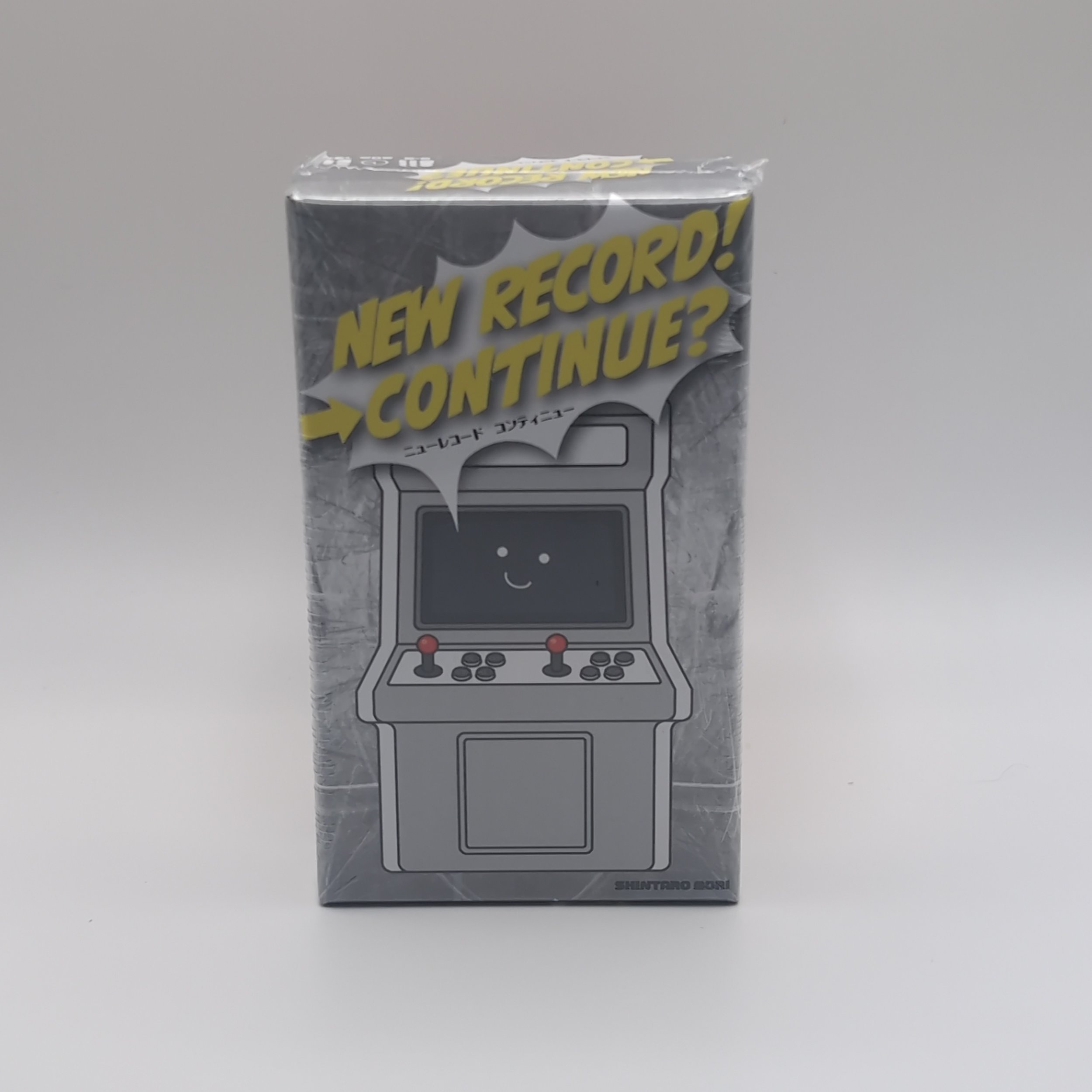
New Record! Continue? is a kind of go-out game, where players aim to be the first to get rid of all their cards.
Players may play any number of cards of the same rank at once. After that, each subsequent player must either play the same number of cards with a higher rank, or play one more card of any rank.
However, the game isn’t just about competing with other players. Each player also keeps a personal record of how many cards they’ve played together as a set.
Each of these recorded cards counts as points.
But — a new card can only be recorded if it’s played with a higher number than the one already placed there. In other words, only when you set a new record.
For example, if you play two 7s as a pair, one of them is placed in your personal area as your record for “two-card plays.”
Later, to update your record for two-card plays, you must play a pair with a higher number than 7 — that is, any pair from 8 to 13.
By steadily updating your personal records, you earn points — so you’ll want to play your weaker cards little by little, in order.
However, once a set number of players have emptied their hands, the game suddenly ends, and all remaining cards in your hand become negative points equal to their face value!
If you play too fast, you won’t have any points.
If you play too slowly, the penalties will pile up.
Everyone must balance between their own timing and the pace of their opponents, searching for the line that yields the highest score.
This game is Japanese but is language-independent and English rules are provided as PDF's if they are not within the box.
New Record! Continue? is a kind of go-out game, where players aim to be the first to get rid of all their cards.
Players may play any number of cards of the same rank at once. After that, each subsequent player must either play the same number of cards with a higher rank, or play one more card of any rank.
However, the game isn’t just about competing with other players. Each player also keeps a personal record of how many cards they’ve played together as a set.
Each of these recorded cards counts as points.
But — a new card can only be recorded if it’s played with a higher number than the one already placed there. In other words, only when you set a new record.
For example, if you play two 7s as a pair, one of them is placed in your personal area as your record for “two-card plays.”
Later, to update your record for two-card plays, you must play a pair with a higher number than 7 — that is, any pair from 8 to 13.
By steadily updating your personal records, you earn points — so you’ll want to play your weaker cards little by little, in order.
However, once a set number of players have emptied their hands, the game suddenly ends, and all remaining cards in your hand become negative points equal to their face value!
If you play too fast, you won’t have any points.
If you play too slowly, the penalties will pile up.
Everyone must balance between their own timing and the pace of their opponents, searching for the line that yields the highest score.