Pascle
A go-out game where passing makes the strength of your cards flip around!
Have you ever played a Daifugō-style game and thought: “My hand luck is terrible — how am I supposed to win with this hand?”
This is a Daifugō-style go-out game created with rules intended to ease that feeling a little.
In this party game, you play cards with numbers higher than the previous player’s card, try to get rid of your hand, and the last player remaining loses.
The cards have numbers on both the top and bottom, and the game proceeds using the number on the top side of the card.
Basically, you cannot change a card’s vertical orientation. The strength of the numbers does not change: 1 < 10. 1 is weak and 10 is strong; it never reverses.
During the game, two actions can make the up-down orientation flip around.
One is when two cards of the same number are played to the field: everyone flips all the cards in their hand around.
The other is when you pass on your turn: you may choose one card from your hand and flip it around. You do not have to.
You may pass any number of times. Even after passing once, you may play a card on your next turn.
Get notified by email when this product is in stock.
Pascle
A go-out game where passing makes the strength of your cards flip around!
Have you ever played a Daifugō-style game and thought: “My hand luck is terrible — how am I supposed to win with this hand?”
This is a Daifugō-style go-out game created with rules intended to ease that feeling a little.
In this party game, you play cards with numbers higher than the previous player’s card, try to get rid of your hand, and the last player remaining loses.
The cards have numbers on both the top and bottom, and the game proceeds using the number on the top side of the card.
Basically, you cannot change a card’s vertical orientation. The strength of the numbers does not change: 1 < 10. 1 is weak and 10 is strong; it never reverses.
During the game, two actions can make the up-down orientation flip around.
One is when two cards of the same number are played to the field: everyone flips all the cards in their hand around.
The other is when you pass on your turn: you may choose one card from your hand and flip it around. You do not have to.
You may pass any number of times. Even after passing once, you may play a card on your next turn.

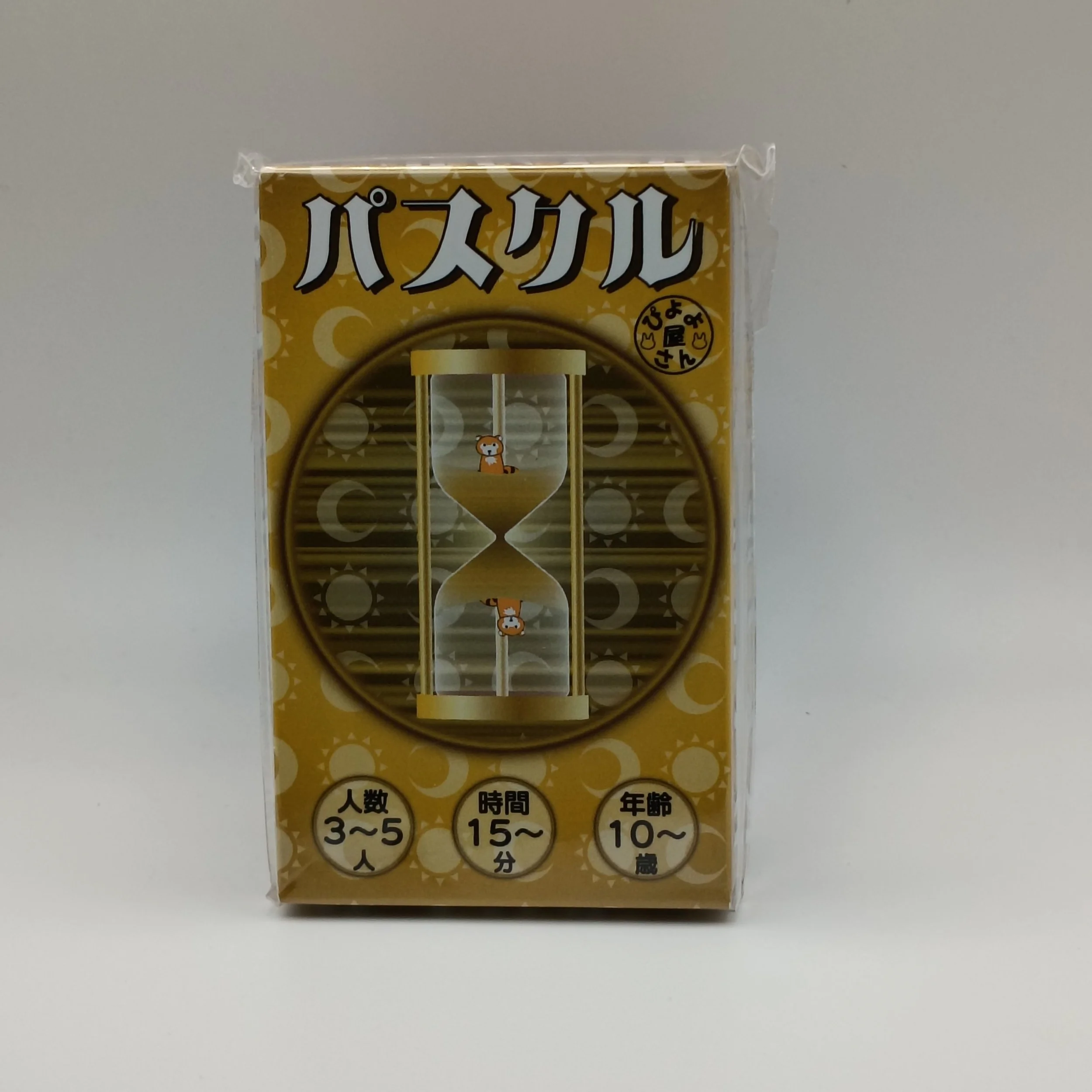 Image 1 of 1